
Evidence is not an invention date
At Wonderwerk Cave in South Africa, a 2012 study reported microscopic ash and burned bone in deposits about one million years old. This supports fire inside the cave. It does not supply the date when humans first invented ignition, or prove that every fire at that time was made deliberately. [1]
Using fire versus making fire
Research published online in December 2025 reported evidence of deliberate fire-making at Barnham, England, around 400,000 years ago. Heated deposits and fire-cracked flint occur with rare iron-pyrite fragments, interpreted as material brought to strike sparks. It is evidence at one site, not a universal start date for a skill. [2]
Three ways to light a cave
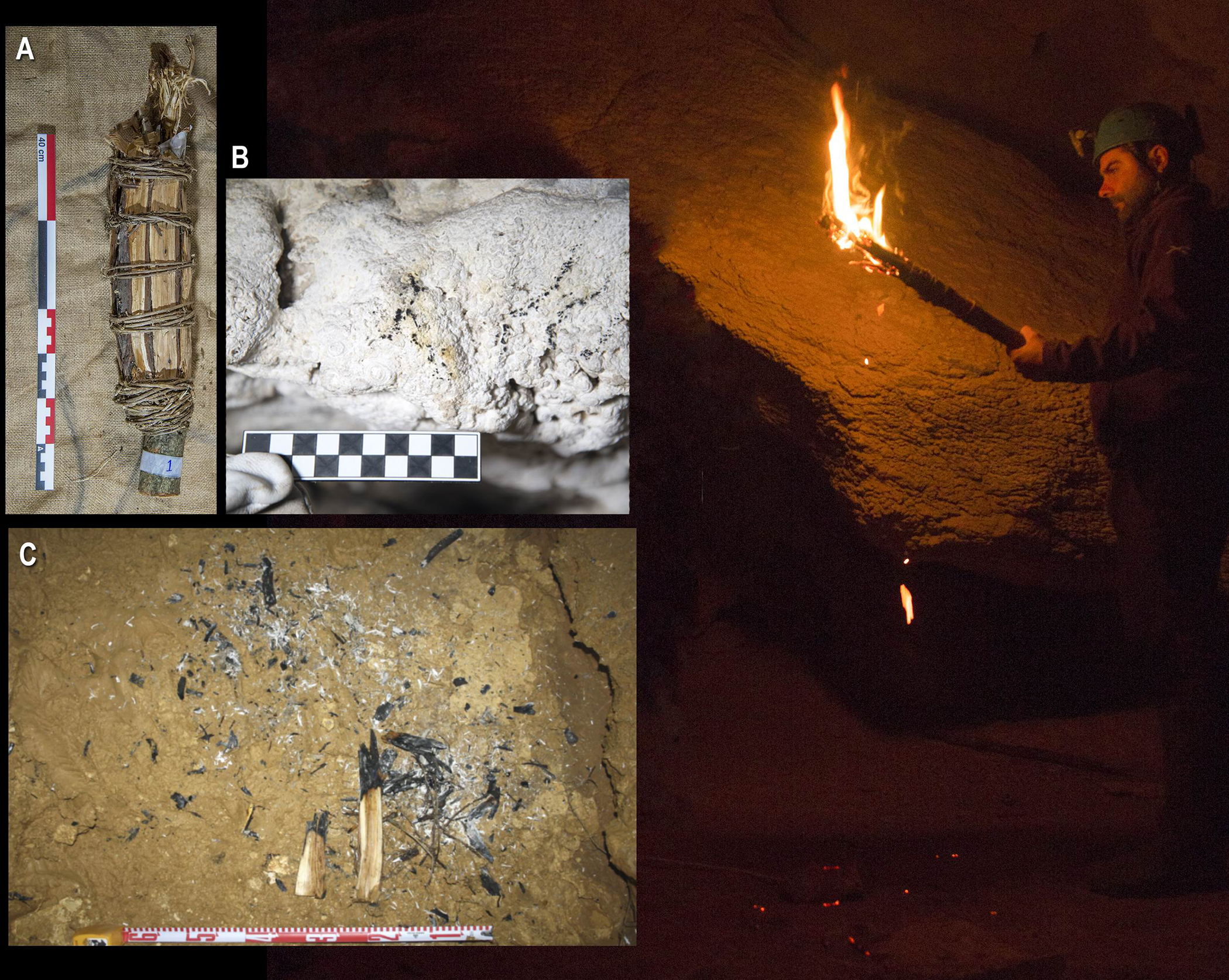
Archaeological research distinguishes hearths, wooden torches and portable grease lamps. A hearth concentrates light in one place. A torch can travel. A small fat-fueled lamp offers another balance of duration, smoke and illumination. In a 2021 experimental study, reconstructed versions behaved differently, suggesting that prehistoric users could choose tools for different tasks. [3]
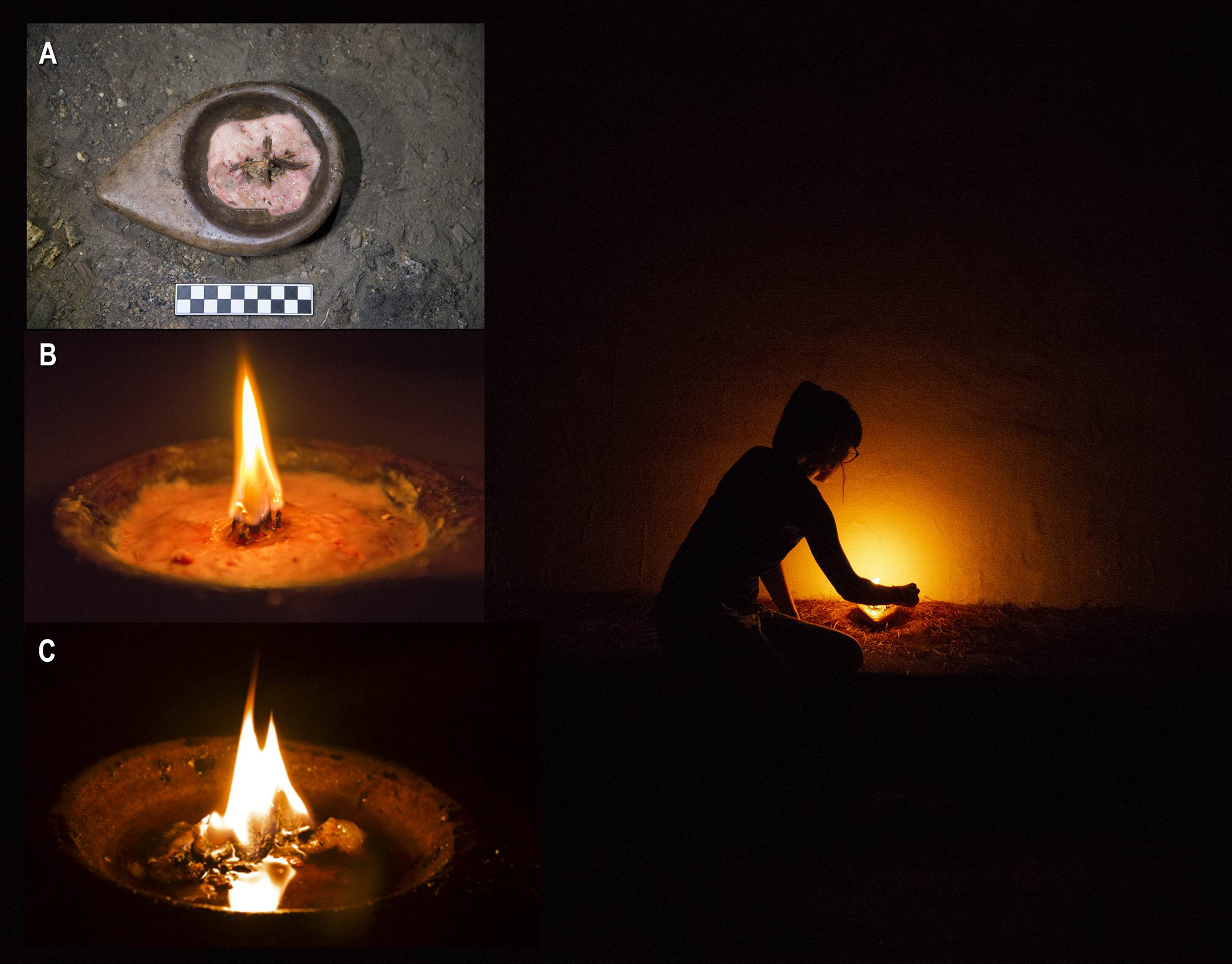
A small reservoir changes the experience of darkness. These frames show a modern animal-fat lamp experiment before ignition and after 1 and 43 minutes. They test a possible prehistoric tool rather than record an ancient scene.
Medina-Alcaide et al. (2021), PLOS ONE 16(6): e0250497, Figure 7 · Creative Commons Attribution 4.0; credit original authors and publication View source and object record ↗Light becomes something to plan
Moving into a deep cave requires more than a flame: fuel must last long enough, smoke must be manageable, and a return route must remain possible. These are already lighting-design questions. Experimental reconstructions help test possibilities, but they are models of past behavior rather than direct records of every prehistoric journey. [3]