
About 4.6 billion years ago · The Sun forms
Astronomical estimate. Our natural starting point precedes humans by billions of years. Use an approximate age, rather than a precise calendar year. [1]
Read this chapter →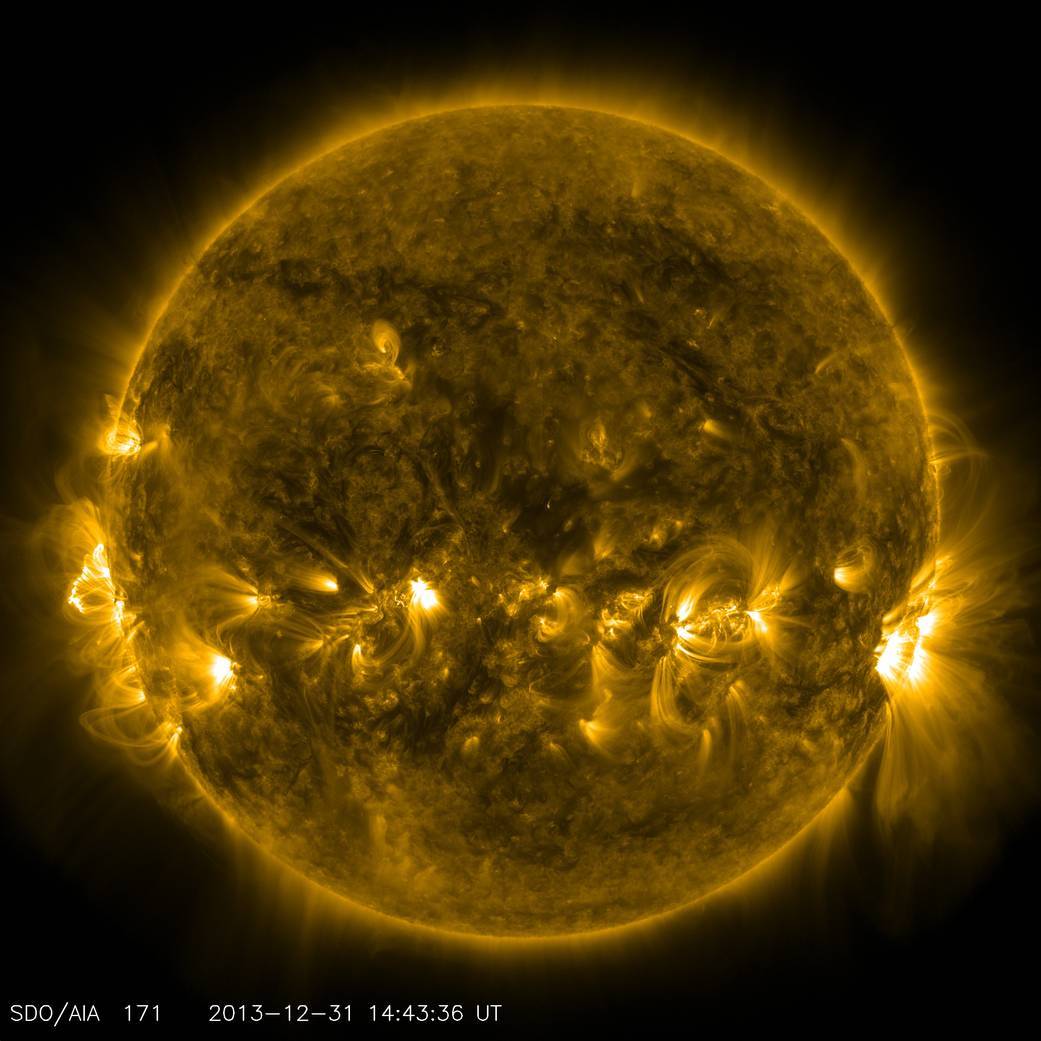
Solar corona and upper transition region, SDO AIA 171 angstrom; false-color extreme-ultraviolet image, not visible-light appearance
NASA/SDO · NASA media guidelines permit factual educational and informational website use with acknowledgment; no endorsement implied View source and object record ↗About 1 million years ago · Fire inside Wonderwerk Cave
Archaeological evidence. Microscopic ash and burned bone support fire inside the cave. Surviving evidence cannot tell us the first time anyone used fire. [2]
Read this chapter →About 400,000 years ago · Fire-making at Barnham
Archaeological interpretation. Heated deposits and pyrite support deliberate ignition at this English site. This is distinct from merely encountering natural fire. [3]
Read this chapter →Upper Paleolithic · Portable light enters the caves
Archaeology and experiments. Torches, hearths and fat lamps served different needs. Modern reconstructions test duration, smoke and mobility; they are not images of ancient people. [4]
Read this chapter →1st century CE · A Roman oil lamp survives
Dated object. The Met’s terracotta lamp documents a reservoir and wick nozzle. Its date belongs to this object, not to the invention of oil lighting. [5]
Read this chapter →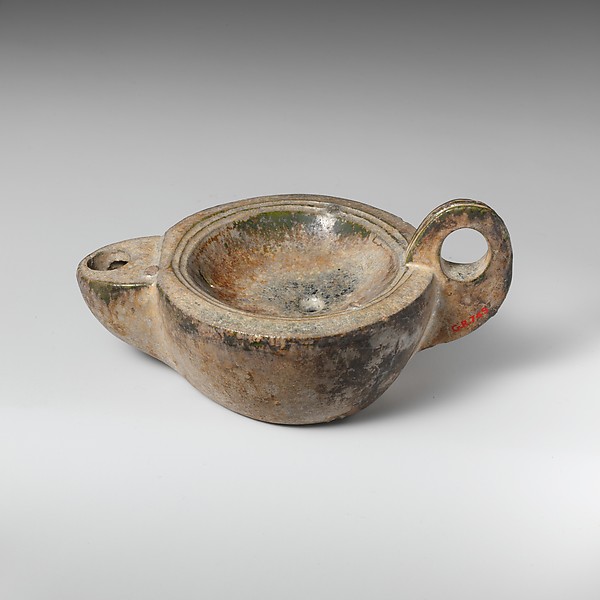
Terracotta oil lamp
The Metropolitan Museum of Art, Purchase, 1896, 96.9.226 · Public domain; Met Open Access View source and object record ↗500–1100 CE · A Kachemak stone lamp
Dated object. A lamp from Cook Inlet, Alaska, records a distinct northern tradition of fuel-based lighting. Lighting history developed in many places. [6]
Read this chapter →9th century · A bronze lamp at Nishapur
Dated object. An excavated Iranian lamp combines a fuel well, spout and handle. Familiar functions could take very different material forms. [7]
Read this chapter →Georgian Britain · Candles and rushlights coexist
Documented practice. Tallow, beeswax and prepared rushes offered different costs and uses. There is no securely established universal first-candle date in this chronology. [8]
Read this chapter →Late 18th century · Argand improves the oil burner
Technology development. A circular wick and chimney improve airflow around the flame. This is an improvement to combustion rather than a new source of energy. [9]
Read this chapter →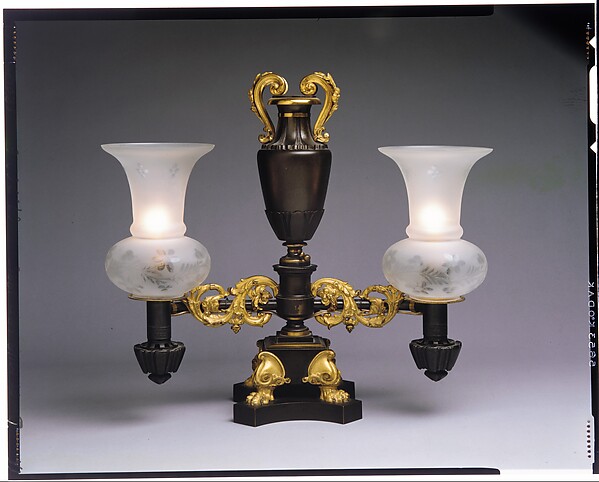
Argand Lamp
The Metropolitan Museum of Art, Gift of John C. Cattus, 1967, 67.262.6 · Public domain; Met Open Access View source and object record ↗1792 · Murdoch lights his home with gas
Documented installation. Coal gas illuminates William Murdoch’s Cornwall home, an early practical milestone in a larger British gas-lighting story. [10]
Read this chapter →1807 · Gas lamps on Pall Mall
Public demonstration. Frederick Winsor demonstrates street lighting in London. Demonstrating a system and supplying whole cities are different achievements. [10]
Read this chapter →1813 · A public gasworks opens in Westminster
Infrastructure. Central production and distribution make the burner part of a network. Adoption remains uneven between places and households. [10]
Read this chapter →1822 · Fresnel completes his flashing-lens design
Optical design. Glass redirects light into a useful beam. Better delivery can improve lighting without inventing a new emitter. [11]
Read this chapter →1831 · Faraday discovers induction
Experimental discovery. Faraday’s August experiments establish electromagnetic induction. Electrical generation will become essential to lighting systems. [12]
Read this chapter →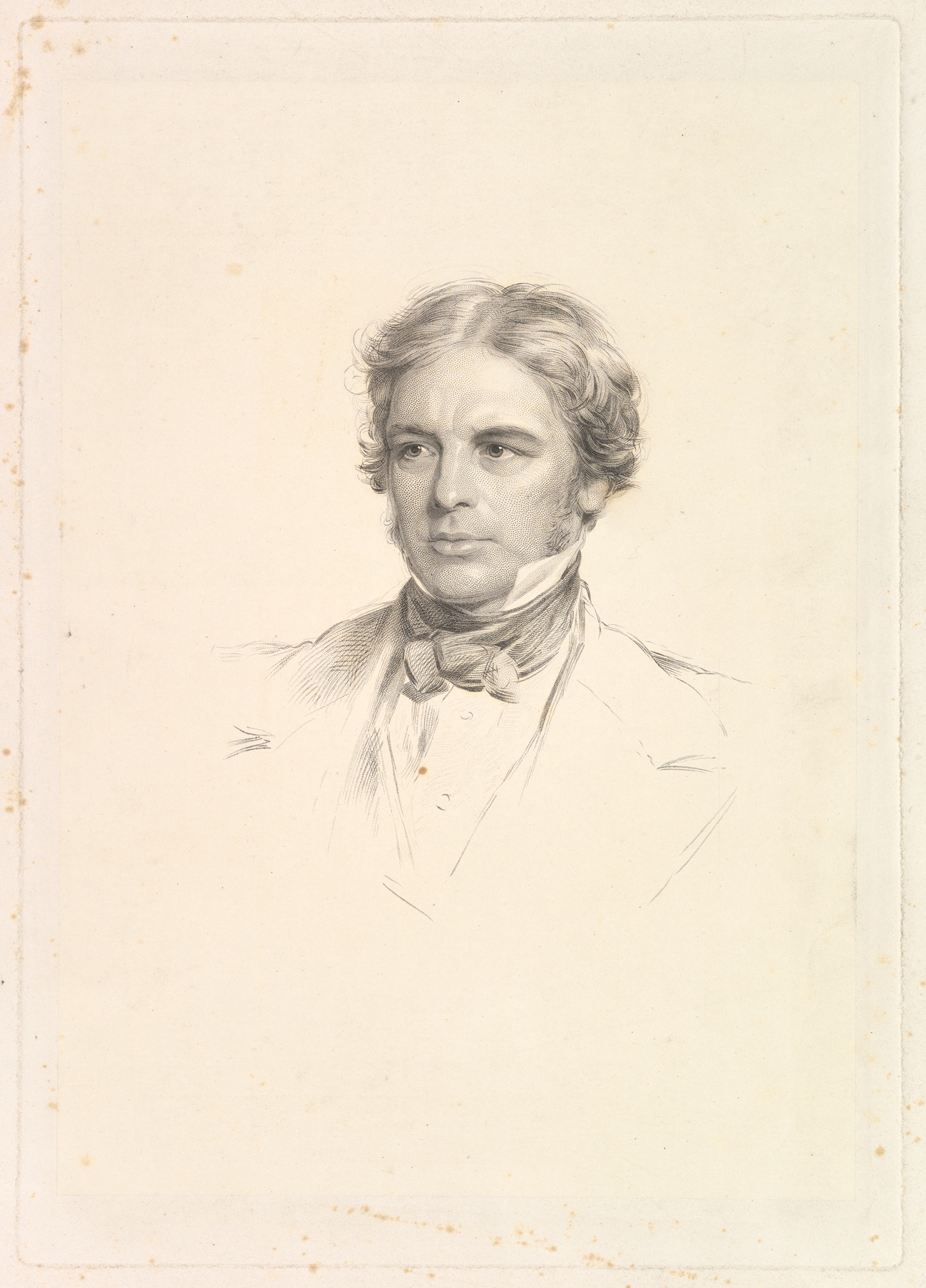
Michael Faraday in an 1852 engraving by William Holl the Younger, after George Richmond. The portrait dates from after his 1831 induction experiments; it does not depict the experiment itself.
William Holl the Younger, after George Richmond. The Metropolitan Museum of Art, Purchase, Brooke Russell Astor Bequest, 2013, 2013.86 · Public domain; Met Open Access, CC0 View source and object record ↗1860s–1870s · Arc lighting becomes practical
System development. Generators help electric arcs move beyond laboratory experiments into streets and large spaces. Consumed carbon electrodes still need attention. [13]
Read this chapter →1879 · A practical incandescent milestone
Laboratory development. Edison’s team advances carbon-filament lighting alongside work by Swan and others. The lamp is one component of a complete electrical service. [14]
Read this chapter →1882 · Electric lighting reaches Manhattan customers
Distribution. Edison’s company supplies part of Manhattan. An operating network matters as much as the lamp itself; widespread access takes longer. [14]
Read this chapter →1885 · The gas mantle arrives
Technology introduction. Heating a mantle makes gas lighting brighter, showing that fuel-based technology continued improving while electric systems grew. [15]
Read this chapter →1890s · Tesla and Edison explore fluorescent lighting
Experimentation. Both investigate fluorescent lamps without commercially producing them. Research precedes a practical mass-market system. [16]
Read this chapter →1904 · Tungsten filaments advance
Materials development. European tungsten-filament developments improve on carbon lamps. Manufacturing refinements follow. [16]
Read this chapter →1906 · The IES is established
Institution. A technical community forms around illumination. Shared research and guidance become part of how lighting improves. [17]
Read this chapter →1913 · The CIE takes its present organizational form
Institution. The international commission is restructured as the CIE, following the earlier photometry commission. This is its organizational milestone, not 1931. [18]
Read this chapter →1913 · Gas-filled incandescent lamps improve
Technology development. Langmuir’s inert-gas work improves incandescent performance. The glass envelope contains a carefully engineered environment. [16]
Read this chapter →1930s · Fluorescent lighting moves toward wider use
Development and demonstration. Phosphor-coated discharge research leads into commercial demonstrations and later expansion. There is no single worldwide adoption date. [16]
Read this chapter →1960 · The first working laser
Experimental demonstration. On May 16, Theodore Maiman operates a ruby laser. This starts a new optical-source branch, not immediate replacement of household lamps. [19]
Read this chapter →1962 · A visible red LED milestone
Semiconductor development. Nick Holonyak Jr.’s visible red LED marks an important step. Red emission alone does not solve white room lighting. [16]
Read this chapter →1976 · A spiral compact-fluorescent design
Prototype. Edward Hammer develops a spiral CFL design. Production economics delay its commercialization. [16]
Read this chapter →Early 1990s · Efficient blue LEDs open new possibilities
Semiconductor breakthrough. Akasaki, Amano and Nakamura’s blue-LED work enables new routes to white light. Their achievement receives the 2014 physics Nobel Prize. [20]
Read this chapter →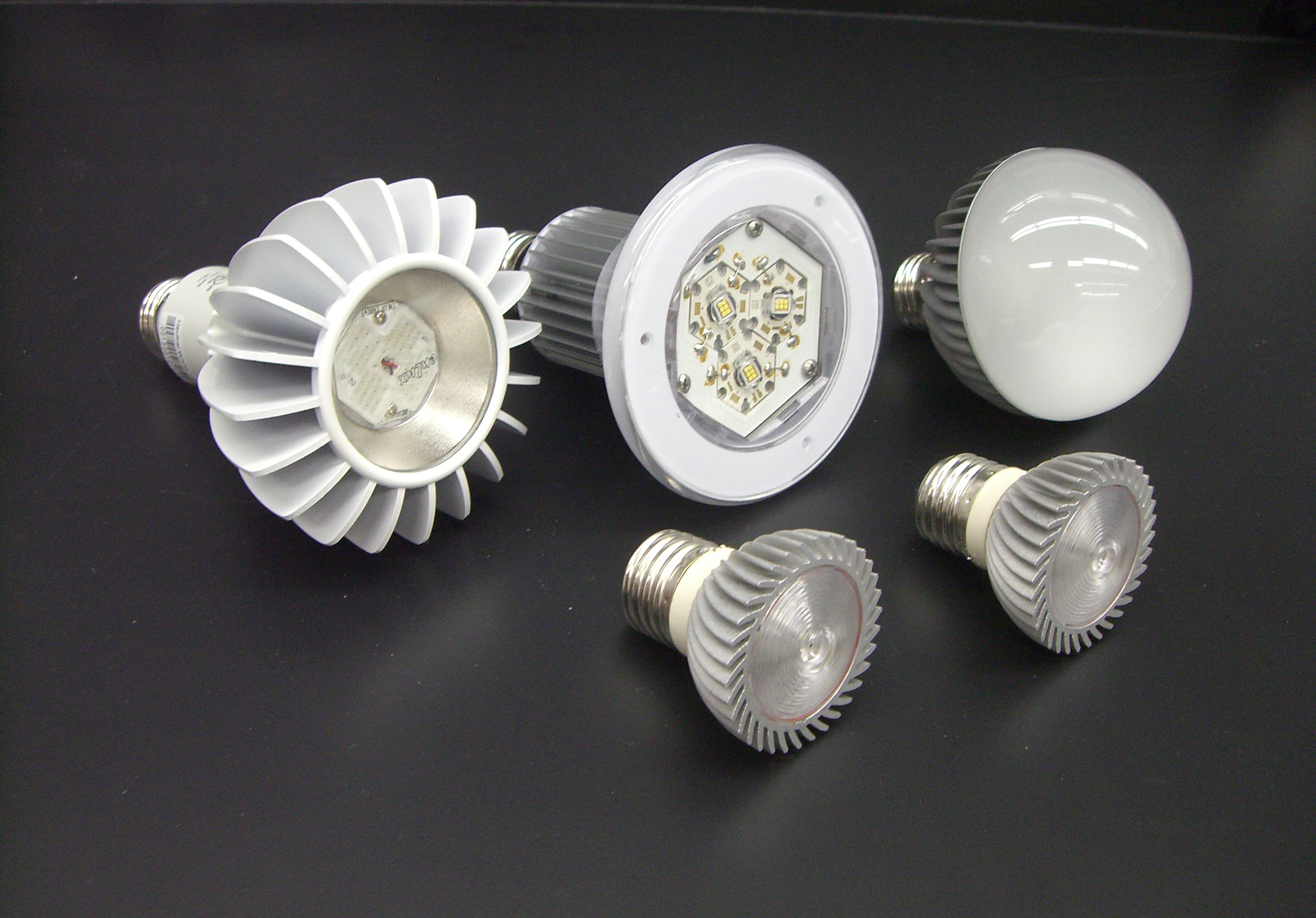
Early LED replacement lamps photographed by NIST in 2008, including visible emitter boards and heat sinks. Their construction makes the transition to solid-state sources tangible.
NIST; reference 08PHY014 · NIST public information may be copied and distributed except material marked copyrighted; image credits requested View source and object record ↗2024–2026 · New emitters remain under investigation
Published research. The future chapters examine nanocarbon, perovskites, afterglow and laser-delivered light. Laboratory results retain their specific experimental boundaries.
Read this chapter →2026–2076 · Possible futures, not dated inventions
Editorial scenarios. The next fifty years are a set of hypotheses. Read the research, barriers and alternative outcomes rather than treating a forecast as established history.
Read this chapter →