
A deeper understanding of light.
A source-linked reference connecting the history of lighting to its science, design and everyday operation.
From a flame to a semiconductor.
Oil and fat fuels, candle wax, a heated filament and an LED show several ways people have obtained useful light. These examples document source families, not a claim that one replaced every earlier form everywhere. Artifacts and modern reconstructions are identified in their captions.
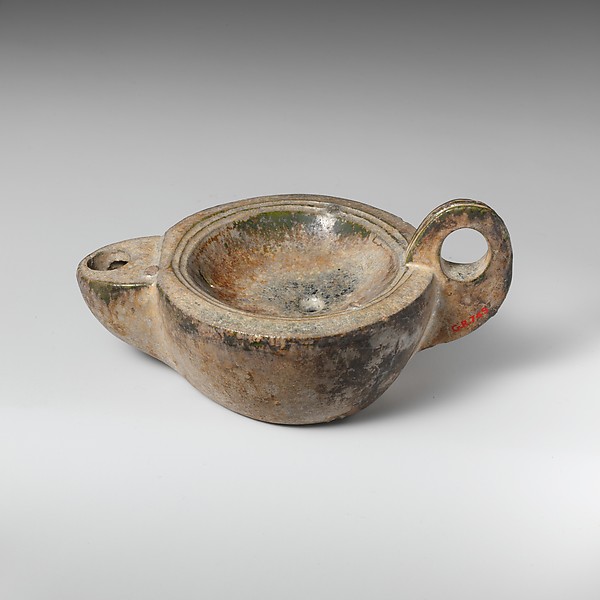
Roman terracotta oil lamp, 1st century CE. Museum photograph of an unlit surviving object.
The Metropolitan Museum of Art, Purchase, 1896, 96.9.226 · Public domain; Met Open AccessOriginal source record ↗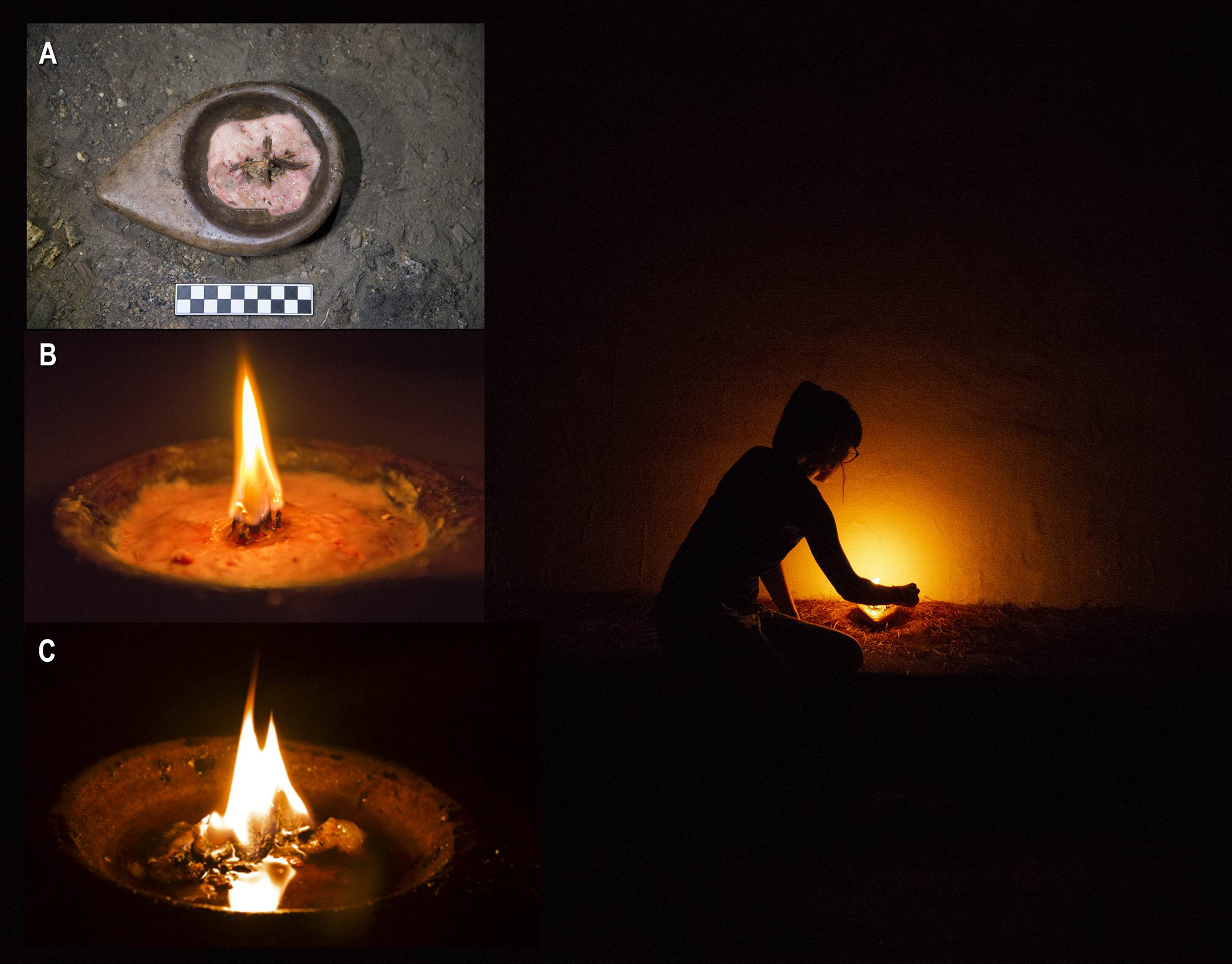
Animal-fat stone lamp in a modern experimental archaeology study, before ignition and after 1 and 43 minutes. This 2021 reconstruction tests prehistoric lighting rather than documenting an ancient scene.
Medina-Alcaide et al. (2021), PLOS ONE 16(6): e0250497, Figure 7 · Creative Commons Attribution 4.0; credit original authors and publicationOriginal source record ↗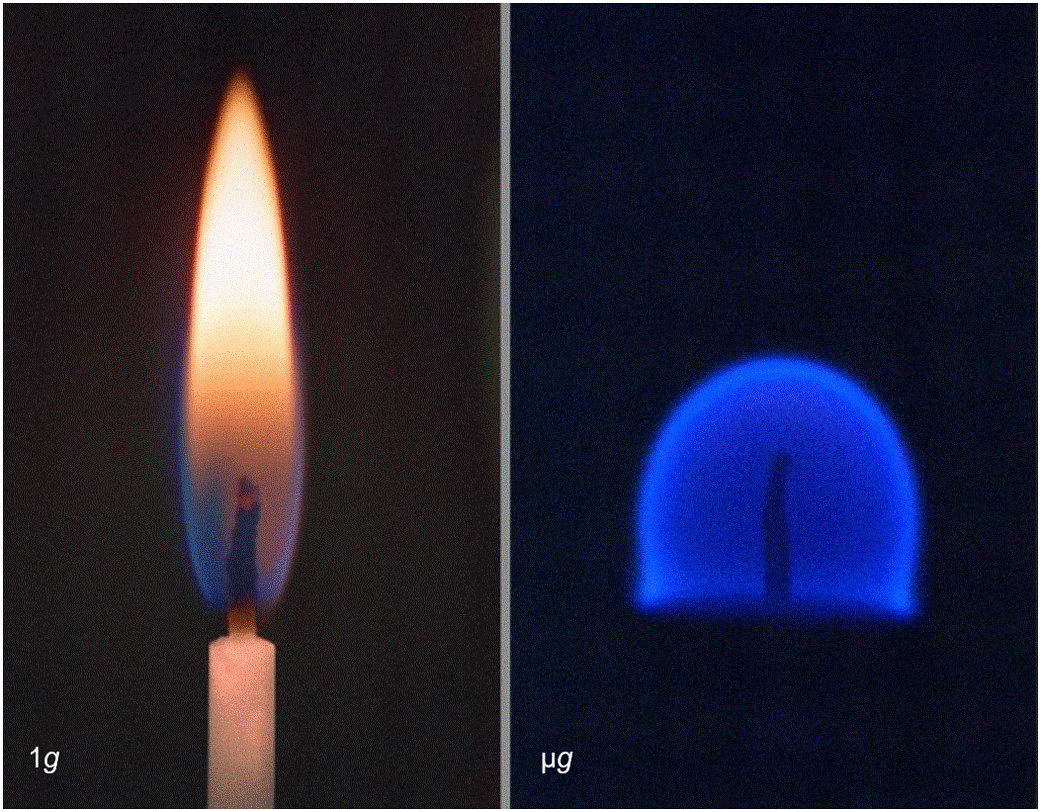
NASA comparison of a candle flame in normal gravity (left) and microgravity (right). Buoyant convection helps shape the familiar terrestrial flame.
NASA · NASA media guidelines permit factual educational and informational website use with acknowledgment; no endorsement impliedOriginal source record ↗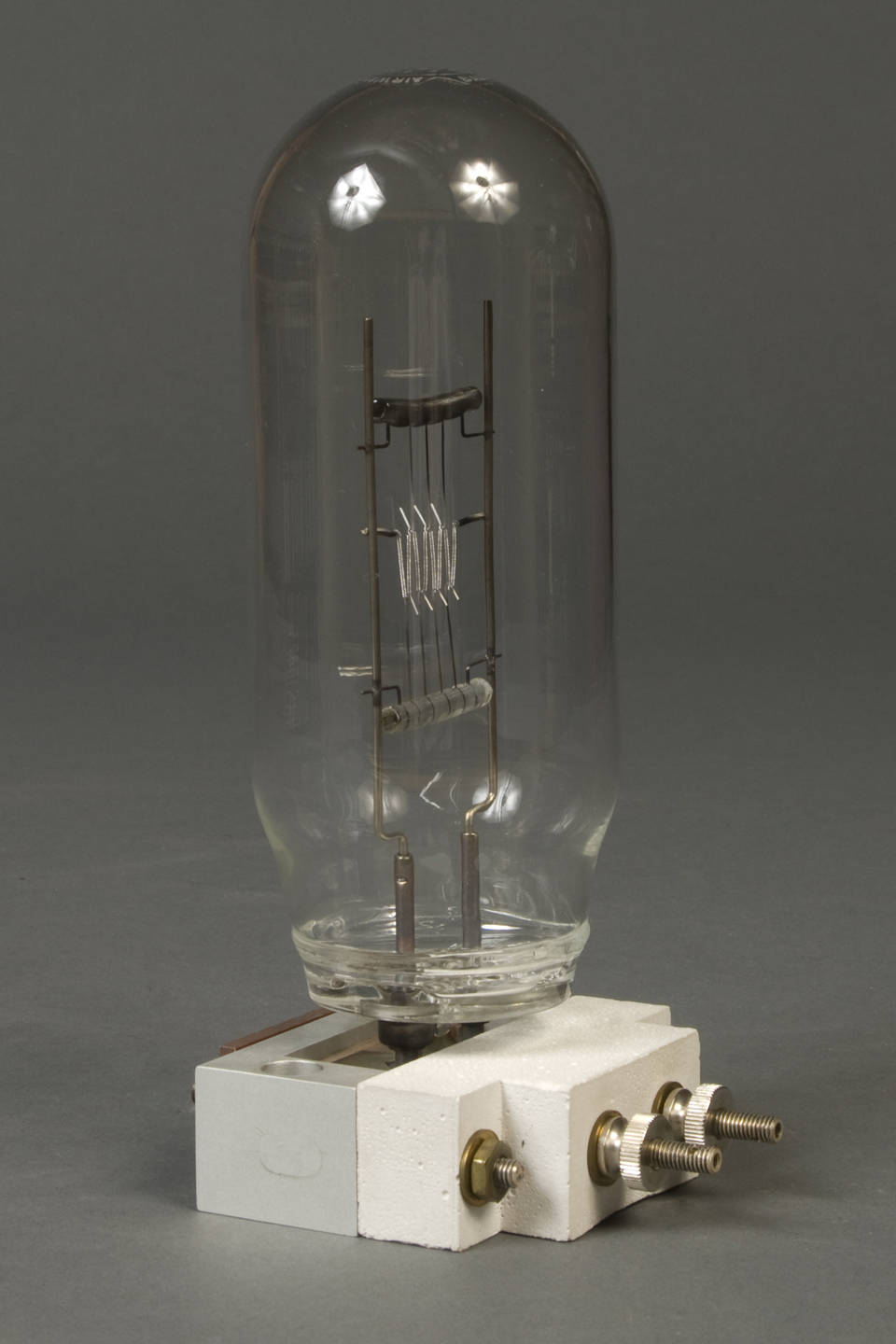
A 500-watt gas-filled incandescent lamp used as a luminous-intensity standard in the 1970s. Photograph of an unlit metrology artifact.
NIST · NIST public information may be copied and distributed except material marked copyrighted; image credits requestedOriginal source record ↗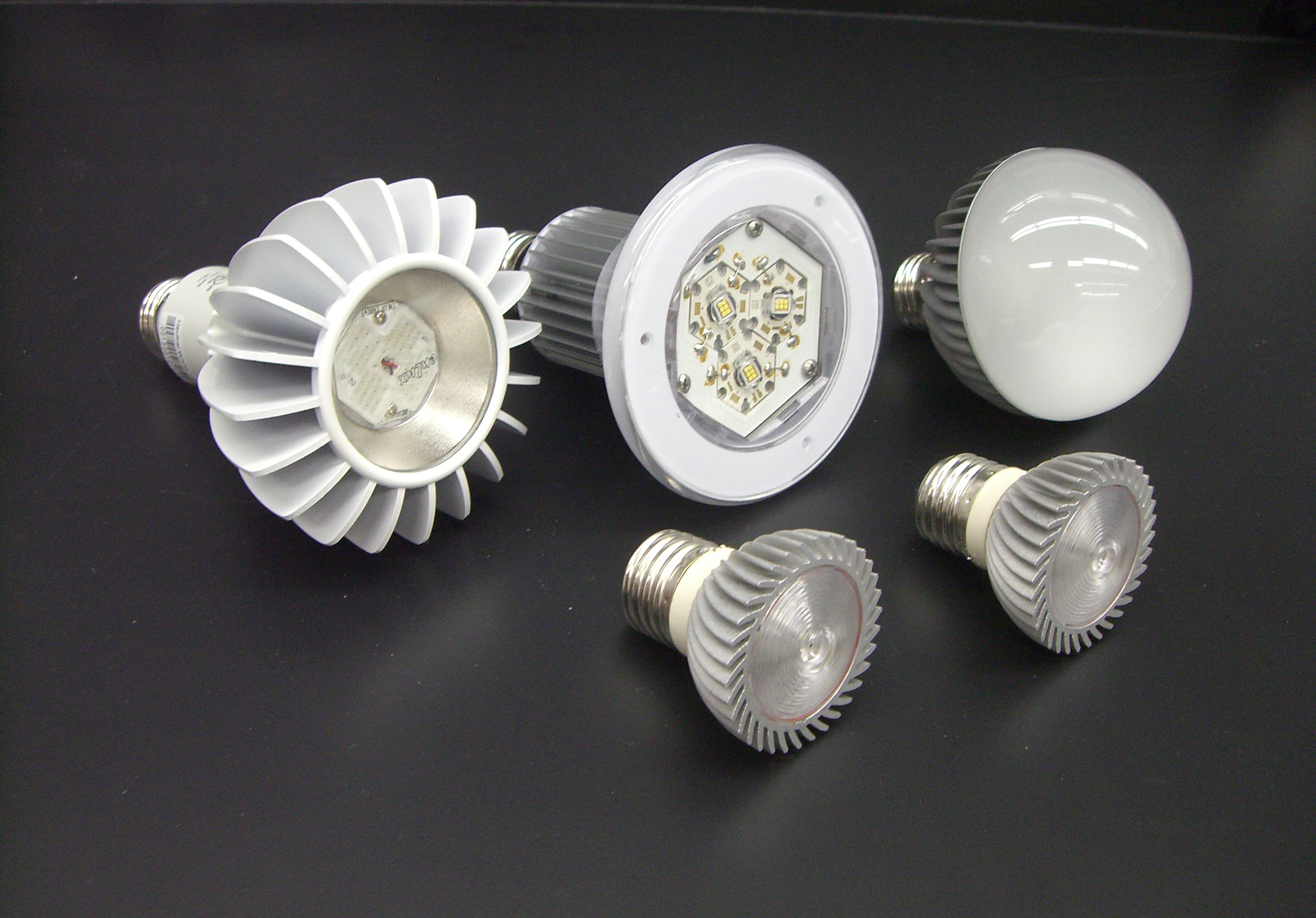
Early LED replacement lamps photographed by NIST in 2008, including visible emitter boards and heat sinks. Their construction makes the transition to solid-state sources tangible.
NIST; reference 08PHY014 · NIST public information may be copied and distributed except material marked copyrighted; image credits requestedOriginal source record ↗What could follow over the next 50 years?
Read the 2026–2076 outlook ↗Image sources and reuse recordsFrom a laboratory spark to a designed world.
Read the stories of Faraday, Tesla, the blue-LED researchers and today’s designers, educators and industry leaders.
Start with the question you have.
Learn the fundamentals
Quantities → Vision → Color → Comfort
Develop a project
Design process → Applications → Photometry → Controls
Evaluate the evidence
IES standards → Maintenance claims → Calculation tools → Sources
Search historical chapters, technical references and pioneer profiles.
55 reference articles, plus the six historical chapters.
Measure the light. Understand the quantity.
A foundation in photometry: what leaves a source, what arrives at a surface, and what reaches the eye.
↗02 · FUNDAMENTALSThe eye is part of the lighting system.
Visibility depends on the task, the observer, the surroundings and adaptation—not simply on adding lumens.
↗03 · FUNDAMENTALSWhite light is more than a Kelvin number.
Separate the appearance of a source from the appearance of objects illuminated by it.
↗04 · FUNDAMENTALSComfort requires control of the view.
Understand discomfort, lost visibility and changing light over time.
↗05 · FUNDAMENTALSRead the distribution, not just the lumen total.
Photometric evidence connects a luminaire to a particular place and viewing condition.
↗06 · FUNDAMENTALSThe Sun belongs in the specification.
Daylight, shading, glazing and electric light form one changing system.
↗07 · FUNDAMENTALSBegin with the purpose. Finish with evidence.
A repeatable workflow for translating human needs into an operating lighting installation.
↗08 · FUNDAMENTALSControl is a sequence of decisions.
Occupancy, daylight, schedules, scenes and overrides need to work together.
↗09 · FUNDAMENTALSLight the task. Respect the night.
Outdoor design connects visibility, distribution, neighbors and the wider environment.
↗10 · FUNDAMENTALSA lumen-maintenance projection is not a fixture lifetime.
Read source test data, projections and complete-system serviceability as different evidence.
↗11 · FUNDAMENTALSDifferent spaces. Different questions.
A route into the relevant IES practice, with a project brief for each setting.
↗12 · FUNDAMENTALSKnow which document answers which question.
A verified directory of 15 IES measurement methods, technical memoranda and lighting practices.
↗13 · FUNDAMENTALSA shared language for light.
20 source-linked concepts, explained in original language with their practical limits.
↗14 · FUNDAMENTALSAn authority is built on evidence.
An independent reference with traceable facts, explicit boundaries and visible provenance.
↗15 · FUNDAMENTALSCalculate, then question the assumptions.
Four transparent teaching tools for units, efficacy, geometry and a preliminary area estimate.
↗16 · PEOPLEThe people behind the light.
Follow a connected history of discoveries, experiments, design practice and the people who help a field learn.
↗17 · PEOPLEHumphry Davy: when the flame itself was the problem.
The miners’ safety lamp asks a lasting design question: can a light serve its task without creating a new hazard?
↗18 · PEOPLEMichael Faraday: before the bulb, a new source of power.
From a bookbinder’s apprenticeship to experiments that linked motion, electricity, magnetism and light.
↗19 · PEOPLESwan and Edison: a glowing filament becomes a working system.
The incandescent lamp’s history involves parallel experiments, practical constraints, teams and commercial infrastructure.
↗20 · PEOPLENikola Tesla: from the arc lamp to the power system.
Documented lighting work, AC engineering and high-frequency experiments reveal a more useful story than the legend.
↗21 · PEOPLEAkasaki, Amano and Nakamura: the blue that changed white light.
A difficult semiconductor problem became a turning point for modern illumination.
↗22 · PEOPLEModern pioneers: shaping what light can do.
Designers, researchers and educators extend the story from electrical illumination into architecture, performance and professional practice.
↗23 · PEOPLEChip Israel: lighting design as integration and education.
An architectural lighting practice grows alongside a commitment to teaching and professional leadership.
↗24 · PEOPLEJames Highgate: helping an industry understand its next step.
Lighting design, LED education, committee service and the practical work of turning technical ideas into informed decisions.
↗25 · TECHNOLOGYInside the luminaire
A light fixture is a coordinated system of light generation, electricity, heat, optics, protection, and service.
↗26 · TECHNOLOGYOptics: where the light goes
Reflection, diffusion, and total internal reflection turn an emitter into a useful distribution.
↗27 · TECHNOLOGYLED thermal engineering
Temperature connects initial performance, installation conditions, and long-term reliability.
↗28 · TECHNOLOGYDrivers and electrical behavior
The driver and control combination helps determine dimming, temporal behavior, and actual operation.
↗29 · TECHNOLOGYSpectral science beyond warm and cool
A spectrum reveals information that one color-temperature label cannot communicate.
↗30 · APPLICATIONSRoadway lighting: designing the night journey
From conflict points to maintained visibility: a planning framework for streets, intersections and crossings.
↗31 · APPLICATIONSPedestrian lighting: the human scale
Plan outdoor light around reassurance, routes, environmental context and the experience of walking.
↗32 · APPLICATIONSSports lighting: tracking motion and seeing the game
Participants, spectators, neighbors and cameras each bring a different brief to the playing field.
↗33 · APPLICATIONSRetail lighting: merchandise, identity and honest seeing
A deeper brief for displays, fitting rooms, customer routes and the people who reset them.
↗34 · APPLICATIONSMuseum lighting: visibility with a memory of exposure
Conservation, visitor experience and documented decisions belong in one lighting plan.
↗35 · APPLICATIONSResidential lighting: a home across the day
Start with lived activities, then coordinate sources, daylight, controls and room-by-room review.
↗36 · APPLICATIONSWorkplace lighting: tasks, screens and individual needs
A practical review framework for mixed work, changing daylight and sustained visual comfort.
↗37 · PRACTICELighting quality: beyond the illuminance number
A useful light level is one component of an environment that helps people see, work and feel comfortable.
↗38 · PRACTICELighting energy: from watts to verified savings
Separate equipment efficiency, operating schedules and measured results before promising a saving.
↗39 · PRACTICECommissioning: making lighting behave as designed
Turn an intention into testable operating behavior, then hand over a system people can maintain.
↗40 · PRACTICEAccessible lighting: design with the people who use it
Treat visual needs as varied, and investigate tasks, comfort and independence together.
↗41 · PRACTICELight pollution: designing the boundary of night
Examine where light goes, when it operates and who experiences it beyond the intended task.
↗42 · PRACTICESolar lighting: a complete energy and lighting system
A successful standalone light must deliver its visual service through the site's demanding energy conditions.
↗43 · FUTUREThe next 50 years of lighting
An evidence-informed outlook for 2026–2076: what may improve, what remains uncertain, and which choices can shape the outcome.
↗44 · PEOPLERichard Kelly: light as a material of architecture
A lamp, a glass tower and a daylighted museum reveal three scales of a collaborative design practice.
↗45 · PEOPLEHoward Brandston: begin with the human view
Landmarks, pedestrian spaces and education illuminate a designer’s emphasis on what people experience.
↗46 · PEOPLEJennifer Tipton: composing light in time
First-person interviews show rehearsal, restraint and collaboration behind the luminous experience of performance.
↗47 · PEOPLEAugustin Fresnel: giving light a direction
A lamp creates light. An optical system decides where it goes. Fresnel's lighthouse story shows why both belong in the history of illumination.
↗48 · FUTURENanocarbon: a family of emitters, not one future lamp.
Carbon dots, electrical emission and nanotube thermal light: what the papers actually demonstrate.
↗49 · FUTUREChemical light: can a reaction become a useful lighting system?
Carbon-dot chemiluminescence and electrochemiluminescence, examined beyond the glow-stick analogy.
↗50 · FUTURELaser light through a fiber: move the source, redesign the outlet.
Remote generation, local conversion and luminous fibers are three different architectures.
↗51 · FUTUREPerovskite emitters: the lifetime claim needs its conditions.
Fast-moving semiconductor research, read with a clear boundary between device results and finished white lighting.
↗52 · FUTURELight after power-off: stored excitation is its own frontier.
New carbon-dot phosphorescence and organic persistent luminescence, with brightness and duration kept separate.
↗53 · HISTORYA timeline of light and lighting
Thirty milestones from the Sun to the next fifty years, with dates, evidence and a path into every era.
↗54 · HISTORYWhale oil and the economy of light
Behind the domestic flame lay ships, processing works, trade and competing fuels. Lighting history reaches far beyond the lamp.
↗55 · PRACTICEPreserving the light of historic places
A historic fixture is both an artifact and part of a working building. Its form, light distribution and modern use require separate attention.
↗From the Sun to the specification.
The six chronological chapters remain the linear historical foundation. The reference library extends the story into measurement, perception, design, standards, operation and the people who shaped the field. This is an expanding independent reference, with IES as its technical baseline.
Begin the six-chapter history ↗